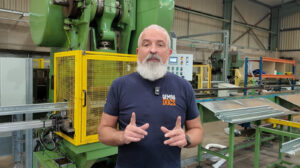






Your best operators know how it’s done.
The question is whether anyone else does.
- Built for operators
- Accessible to everyone
- No desk required
The knowledge is there. It’s just not written down.
Most manufacturing teams have the same problem. The experienced operators know exactly how to set up the machine, run the changeover, handle the deviation. They’ve done it a thousand times.
But ask them to write it down, and the result is a Word document with no photos, formatted on a PC that never goes near the shop floor. So nobody reads it. It gets printed once, laminated, and ignored. The next new hire learns the same way everyone did – by watching Dave.
What that costs you
New hires take longer to reach full productivity - training depends on who's available to show them
Quality deviations repeat because the fix was never captured - it lived in someone's head
When experienced operators leave, their knowledge leaves with them
Document the process where the process happens
Three ways to build an SOP. All of them work on a phone. None of them require a desk.
Video-to-SOP
Documentation that writes itself
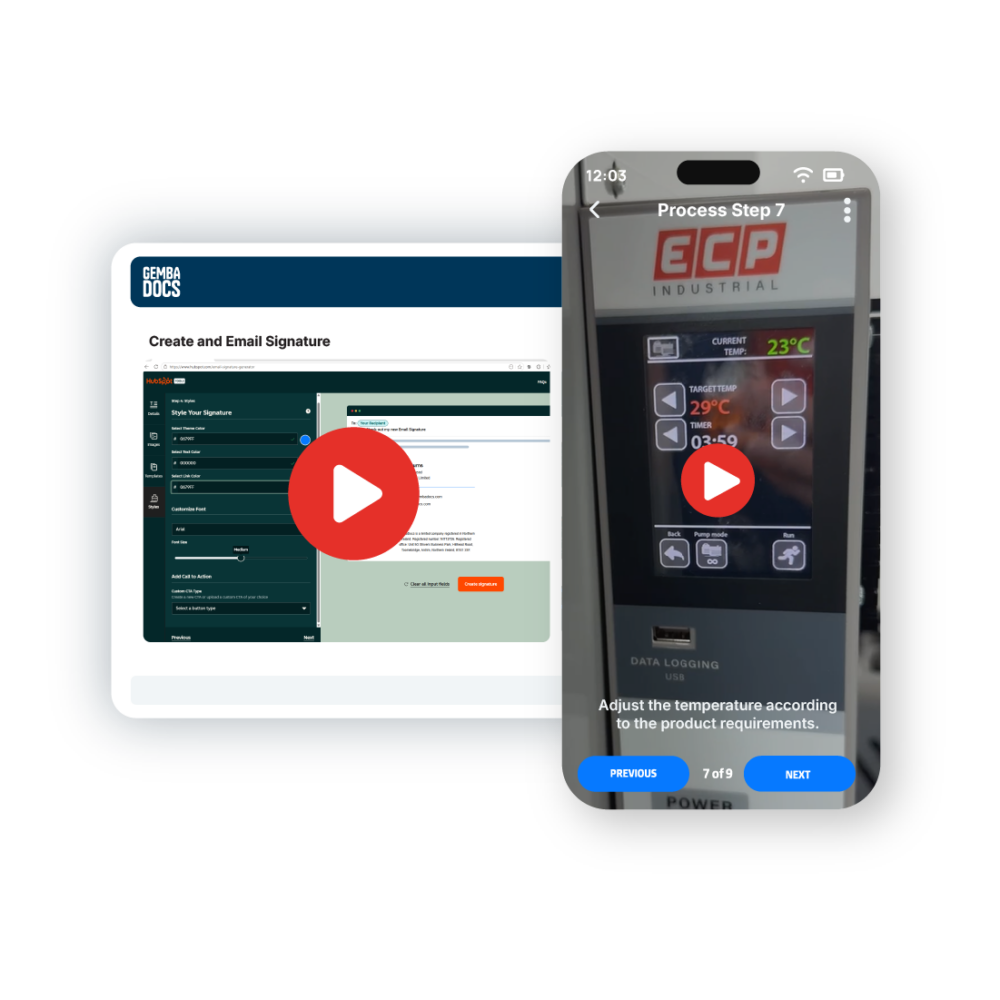
Film the task on your phone. GembaDocs automatically breaks the video into steps and generates written descriptions for each. The person doing the job doesn’t have to write a word.
PDF SOP
Already have SOPs in Word or PDF?
Existing PDFs and Word (saved as PDF) procedures upload directly into GembaDocs and publish through the same QR and link system as everything else.
Everyone can document.
Not just the people comfortable with a keyboard.
The operators who know your processes best are often not the people most comfortable writing documentation. GembaDocs removes that barrier.
Voice to text
Speak the step description out loud. GembaDocs transcribes it on the spot. No typing needed on the floor. Works in the app on iOS and Android.
One tap cleans up grammar, spelling, and clarity while keeping the original wording until you accept the change. The operator who’s never written a procedure before produces the same clear output as anyone else.
One-click translation
Publish a translated version of any SOP in one action. Mixed-language teams each see it in the language they work in. No separate documents. No manual translation.
For operators who find writing the hardest part: film the task. GembaDocs does the rest – steps, sequence, written descriptions. Their knowledge is captured without asking them to type a word.
What manufacturing teams report
Real results from real operations.
All from manufacturers who completed our customer impact survey.
Before GembaDocs
6 hrs
to write one SOP
After GembaDocs
10 mins
to write one SOP
Before GembaDocs
3 hrs
to write one SOP
After GembaDocs
10 mins
to write one SOP
Before GembaDocs
2 hrs
to write one SOP
After GembaDocs
10 mins
to write one SOP
What operations teams document with GembaDocs.
GembaDocs works for any process that should be done the same way every time. In manufacturing, that covers most of what happens on the floor.
Detailed Work Instructions
Assembly and test step-by-step instructions to standardize how you make your products every day. Build consistency and multi-skill your staff.
Safety and Compliance
LOTO, PPE, emergency procedures – revision-controlled, approval-gated, and updated everywhere automatically when the procedure changes.
Maintenance and Cleaning
Planned maintenance checklists and cleaning routines with reminders attached so recurring tasks don’t rely on memory and standards drop.
Quality Checks and Inspections
OK/Not OK image verification, critical step flags, and automatic pass/fail logging – without the admin overhead – all done automatically.
New Hire and Trainee Onboarding
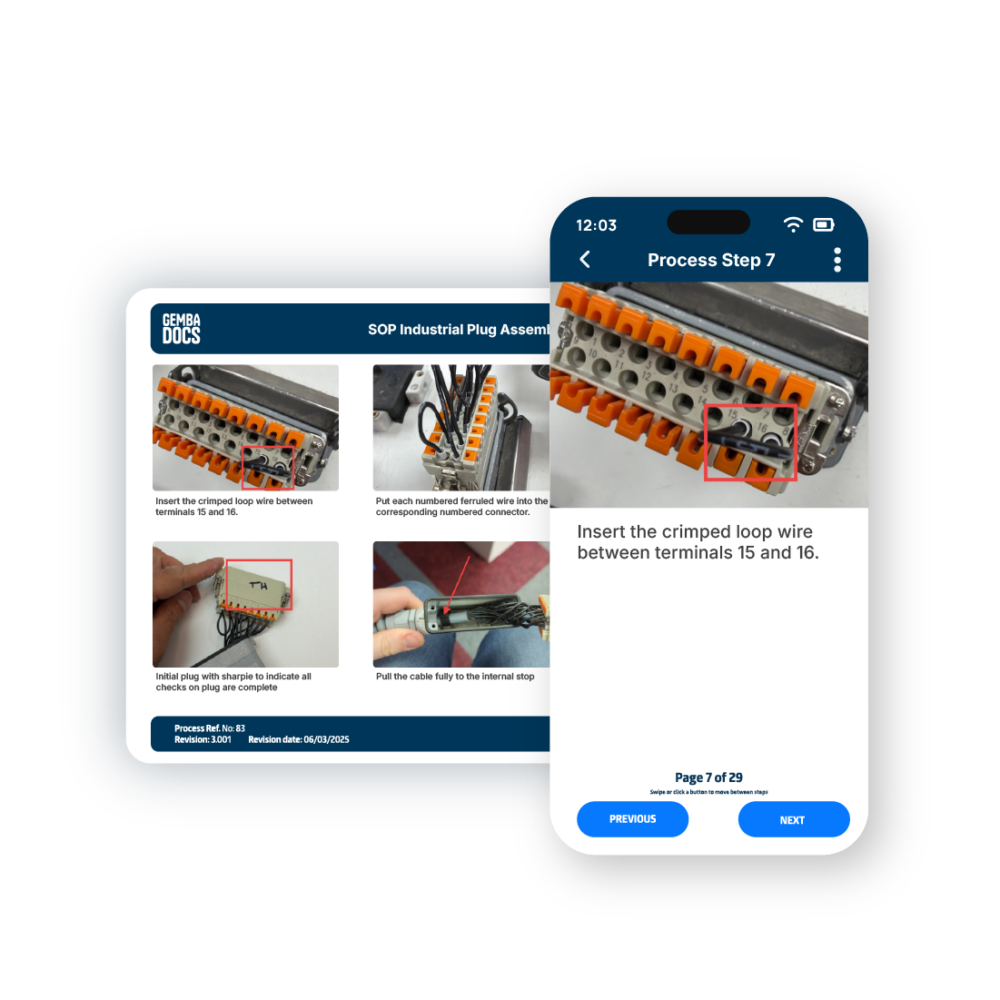
SOPs at the workstation by QR code, step-by-step on a phone. No printing, no filing cabinets, no depending on who’s available.
Machine Setup and Startup
The startup sequence that only three people know – documented once at the machine, QR code on the panel, followable by anyone.
From the people doing the work
If any of this sounds familiar, GembaDocs was built for you.
You want to standardise your processes but you didn’t think you had the resources.
All the burden for creating work instructions for the entire shopfloor is falling on you.
- Your startup sequences live in one person's head - and that person isn't always there
- New hires shadow someone for two weeks because there's nothing written down
- The SOP binder was last updated before the line changed, and nobody's fixed it since
- Audit prep means scrambling to find paperwork that matches what's actually happening on the floor
- When a quality issue repeats, no one can say with certainty what the correct procedure is